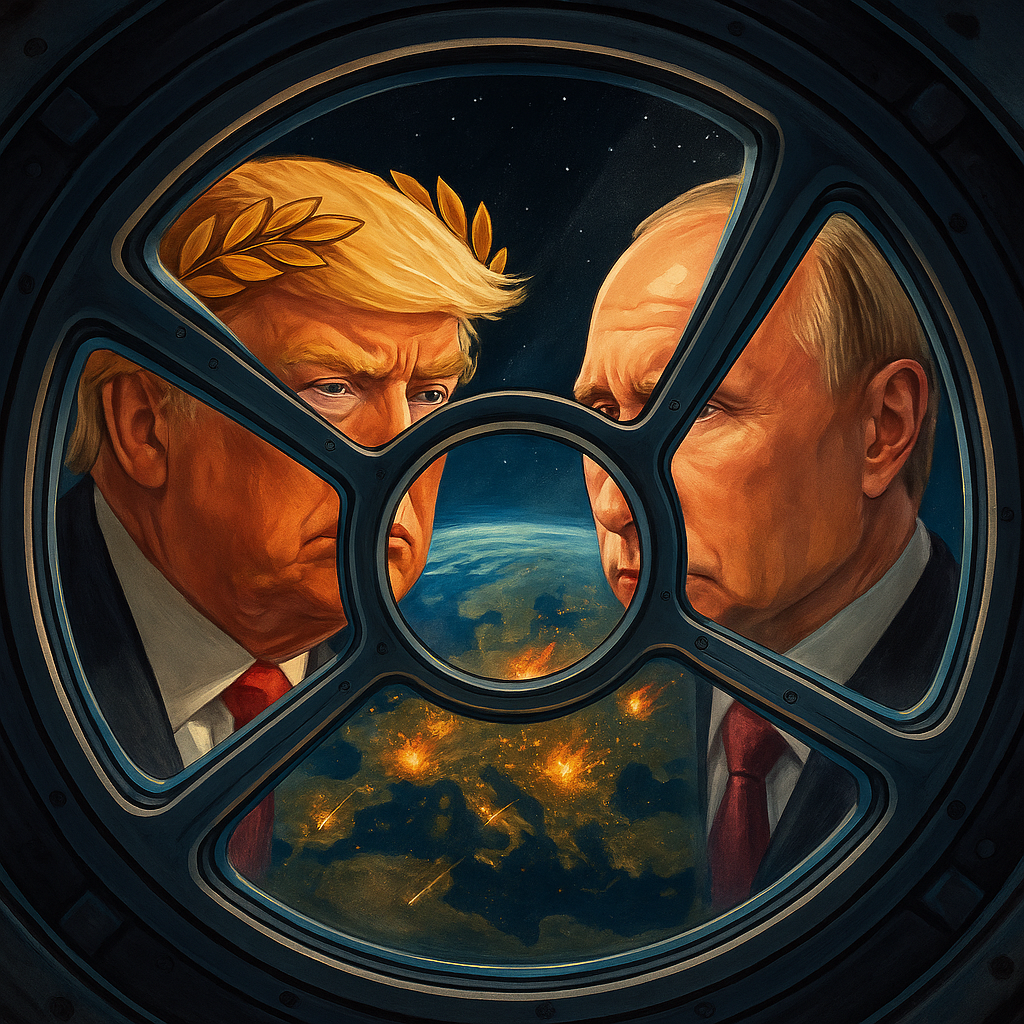
The PJenga Framework by Ike Aaren Hadler — A model for understanding global system instability
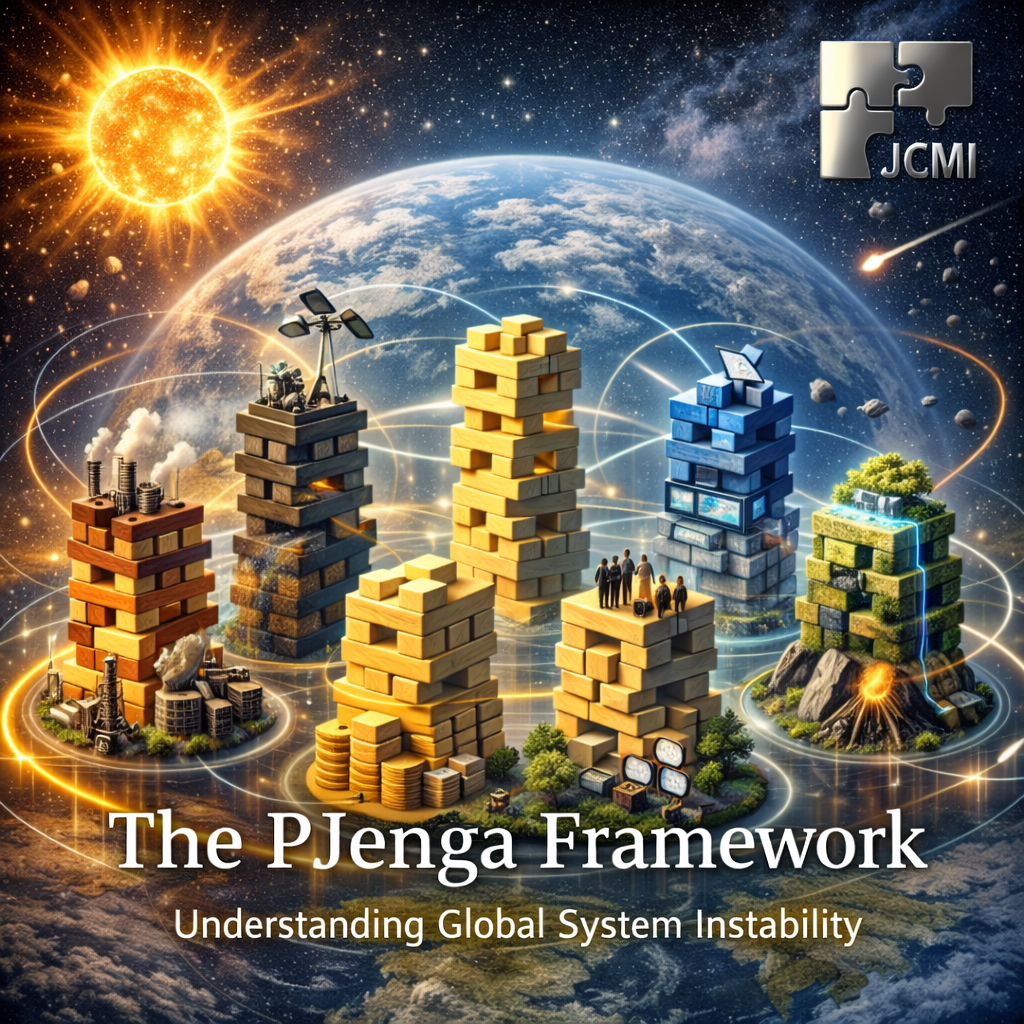
The PJenga Framework is a conceptual model for analyzing complex global systems. It uses the metaphor of interconnected Jenga towers to describe how modern civilization is structured and how instability propagates through it.
In the PJenga model, global stability is not maintained by a single system, but by several interconnected structures. Each structure functions like a tower built from stability blocks. When one block shifts, the structural balance of the tower changes—and the effects may propagate across the entire system.
The Seven PJenga Towers
The modern world rests on seven primary structural systems:
1. Energy systems
Global flows of oil, gas, electricity, and energy infrastructure.
2. Military and security structures
Deterrence, conflicts, and strategic capabilities.
3. Economic and financial systems
Markets, supply chains, capital flows, and trade networks.
4. Information systems
Media ecosystems, narratives, and information warfare.
5. Societal and political stability
Governance, institutions, polarization, and public trust.
6. Demographic dynamics
Population structures, migration, and labor force dynamics.
7. Planetary systems
Climate, ecosystems, water systems, and geological resources.
Each tower contains multiple structural blocks whose stability determines the resilience of the system.
Forces within the PJenga system
Three main forces act on these structures:
• Pressure – shocks such as wars, economic crises, or resource shortages
• Friction – institutional inertia and bureaucratic resistance
• Acceleration – rapid propagation through financial markets or digital networks.
These forces shift the position of stability blocks over time.
Agents and strategic action
The PJenga system is not purely mechanical. Political actors, states, corporations, and organizations act as agents attempting to move blocks within the system to advance strategic goals.
The resulting interactions resemble a multi-dimensional strategic game where multiple players influence different parts of the structure simultaneously.
Time and cascading dynamics
Changes in complex systems rarely occur instantly. Delays, feedback loops, and cumulative pressures mean that the consequences of a shift may emerge weeks, months, or even years later.
The PJenga model therefore focuses on identifying potential cascade points, where instability in one system may propagate into others.
Information and perception
In modern societies, decisions are not based solely on objective reality. Information ecosystems shape perception, influence political decisions, and amplify or distort system signals.
Narratives, media dynamics, and disinformation therefore act as additional forces affecting the stability of the system.
Planetary and cosmic context
Human civilization operates within a larger planetary system. Climate dynamics, geological resources, and ecological constraints form the physical foundation upon which all other systems depend.
Beyond that lies an even larger external field—the cosmic environment—whose influence defines the ultimate boundary conditions of the system.
Monitoring the PJenga system
To analyze global stability within this framework, three conceptual tools are used:
• PJSI – PJenga Stability Index
A composite measure of global system stability.
• PJIEF – PJenga Integrity Energy Field
A representation of systemic tensions and connections between systems.
• PJD – PJenga Dashboard
A monitoring interface visualizing the state of the global system.
Together these tools help identify emerging stress points and potential cascade events within the global structure.